The pterygopalatine ganglion story - until we synapse again
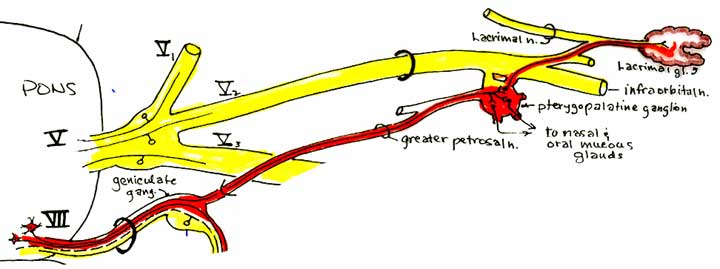
Facial nerve gives off preganglionic fibers in the form of 2 nerves: the greater petrosal and the chorda tympani. Greater petrosal nerve branches from facial at the geniculate ganglion, a sensory ganglion (not to be confused with an autonomic ganglion) along the beginning of the course of the facial nerve within the petrous temporal bone. Greater petrosal exits the anterior slope of the petrous bone to run anteromedially toward the foramen lacerum. It passes through a bit of the cartilage blocking this foramen to enter a canal hidden in its anterior margin, the pterygoid canal (because it lies superior to the pterygoid plates of the sphenoid bone). Greater petrosal is joined by some fibers from the internal carotid plexus (postganglionic sympathetic, of course) called the deep petrosal nerve - they unite to form the nerve of the pterygoid canal. The nerve of the pterygoid canal runs forward to reach the pterygopalatine ganglion, that lies within the pterygopalatine fossa.
|